
GARDENS OF GOLDEN GATE BRIDGE, JAPANESE TEA GARDEN
SAN FRANCISCO, CALIFORNIA
by Linda Laughter, guest blogger
Last spring, we had the opportunity to visit the oldest Japanese Garden in the United States. It is like a peaceful island in the busy city of San Francisco.
The gardens are a complex combination of paths, ponds and a teahouse that features plants and trees pruned and arranged in a Japanese style.


It was originally created for the 1894 California Midwinter International Exhibition on an acre of land. After the show closed Makota Magiwara was hired to maintain and grow the gardens for prosperity. Mr. Magiwara used most of his personal wealth and talents to grow the gardens to 5 acres and he and his family lived there. He imported from Japan many plants, birds and the now famous koi fish.

Unfortunately, in 1942 they were moved to a Japanese internment camp and were never allowed to live there again. A $5,000 check was issued to the family in 1983 which was a minimal belated gesture rather than fair compensation for the lifelong work they had invested in the gardens.

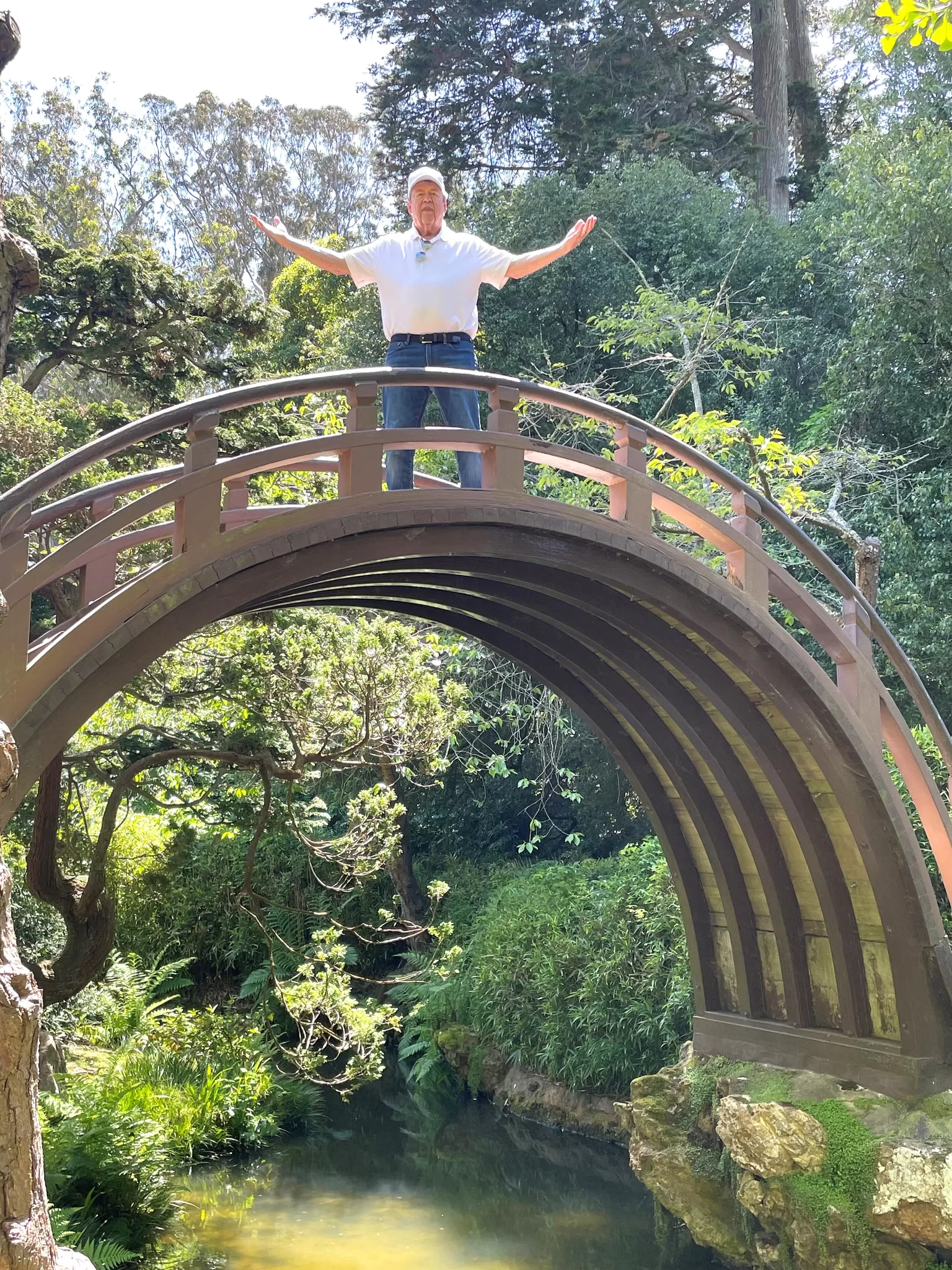
The gardens offered us a calm peaceful walk through Cherry trees, azaleas, magnolias, Japanese maples, pines, and cedars. The walk through the water elements achieved one of the garden’s goals, to make us slow down and reflect on the beautiful landscape. We especially loved the Arched Drum Bridge which had 3 main functions, to slow people down, let barges go under and to reflect a full circle in the water below.


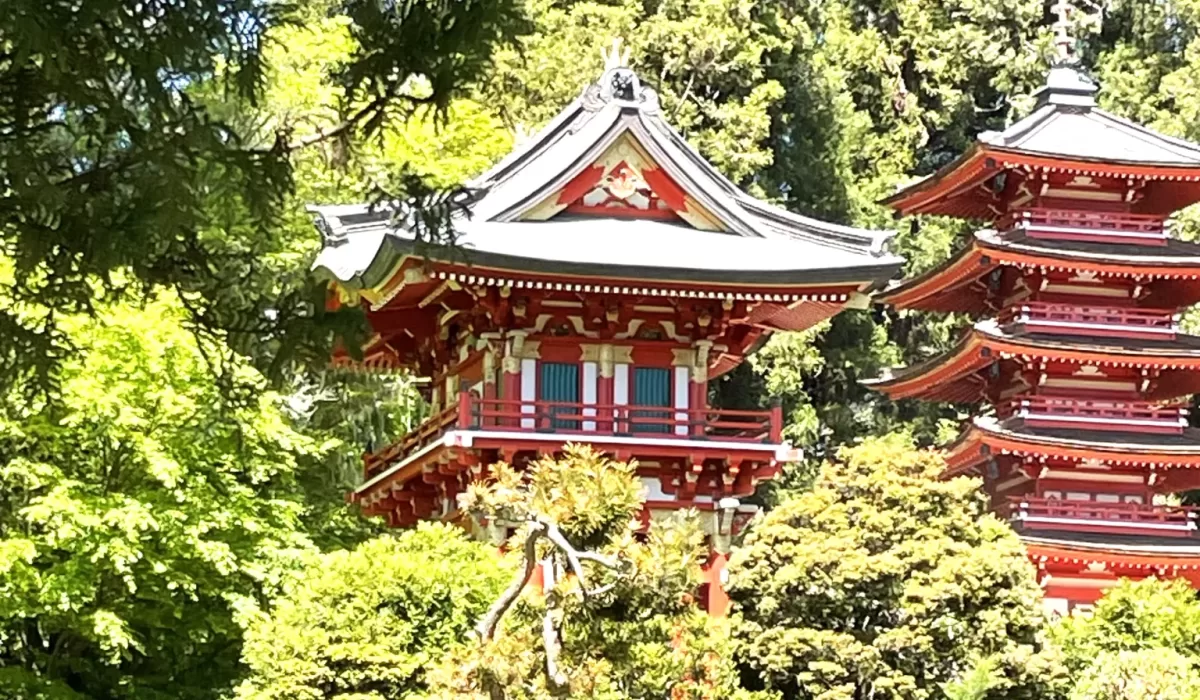
We also liked the Pagoda, originally built for the 1915 Panama-Pacific International Exposition. It is designed to represent a Buddhist’s treasure tower. Mostly we just liked to meander!

We had tea in the “irori” or farm style tea house. We sat at long tables and ate Japanese “Snacks” of rice cakes and fortune cookies. It is said Mr. Magawari created these cookies for the gardens.
We highly recommend this walk through another culture, in a lovely and peaceful way. It remains a tribute to the man who envisioned it so long ago.





Comments
1 CommentMary Lockrow
Mar 2, 2026Beautiful…..mini Japanese piece of heaven and history!